
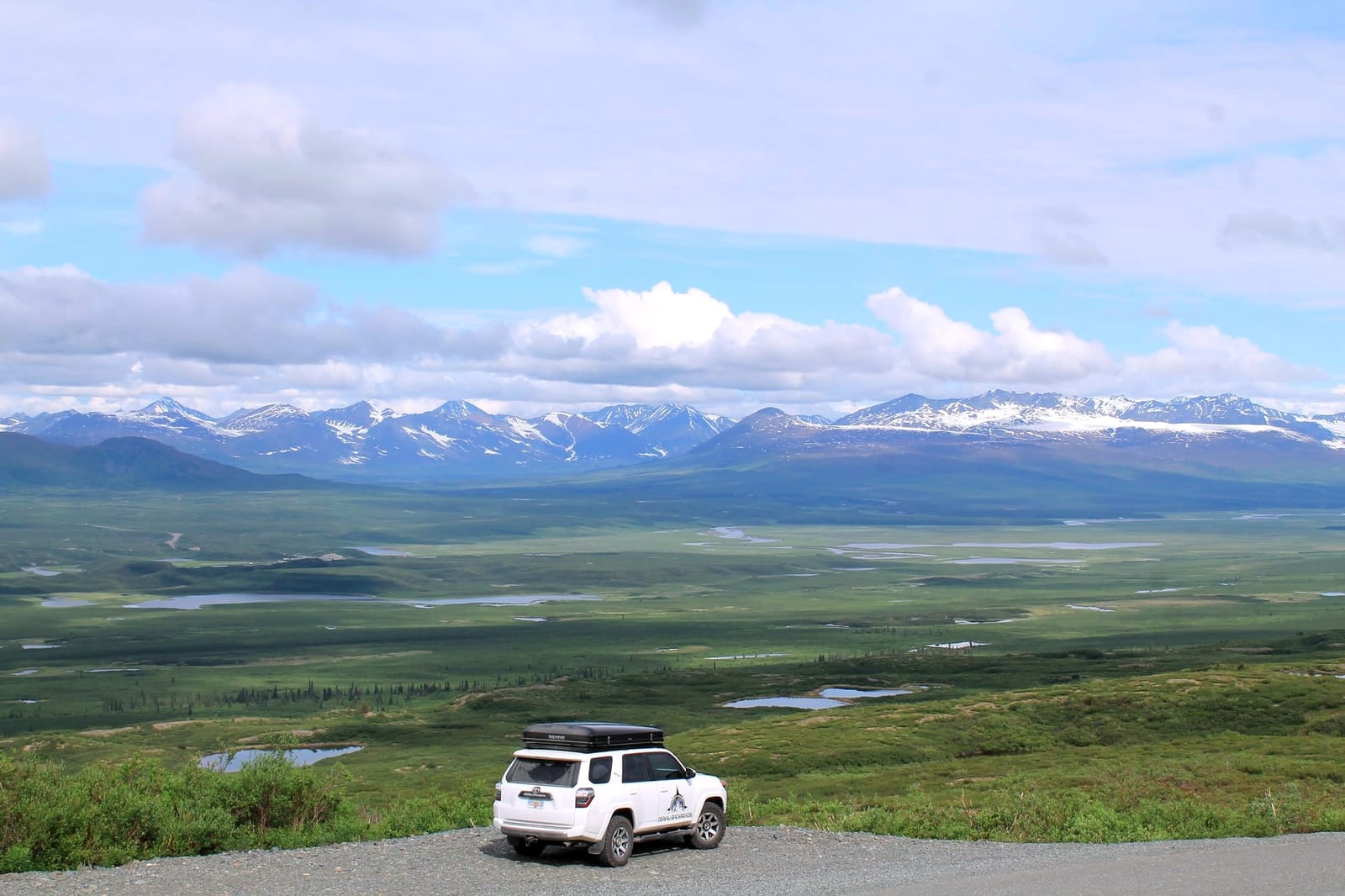
When you choose to cross the Denali Highway, you’re opting for more than a shortcut, you’re taking the road less traveled, where silence and wilderness stretch as far as the eye can see.
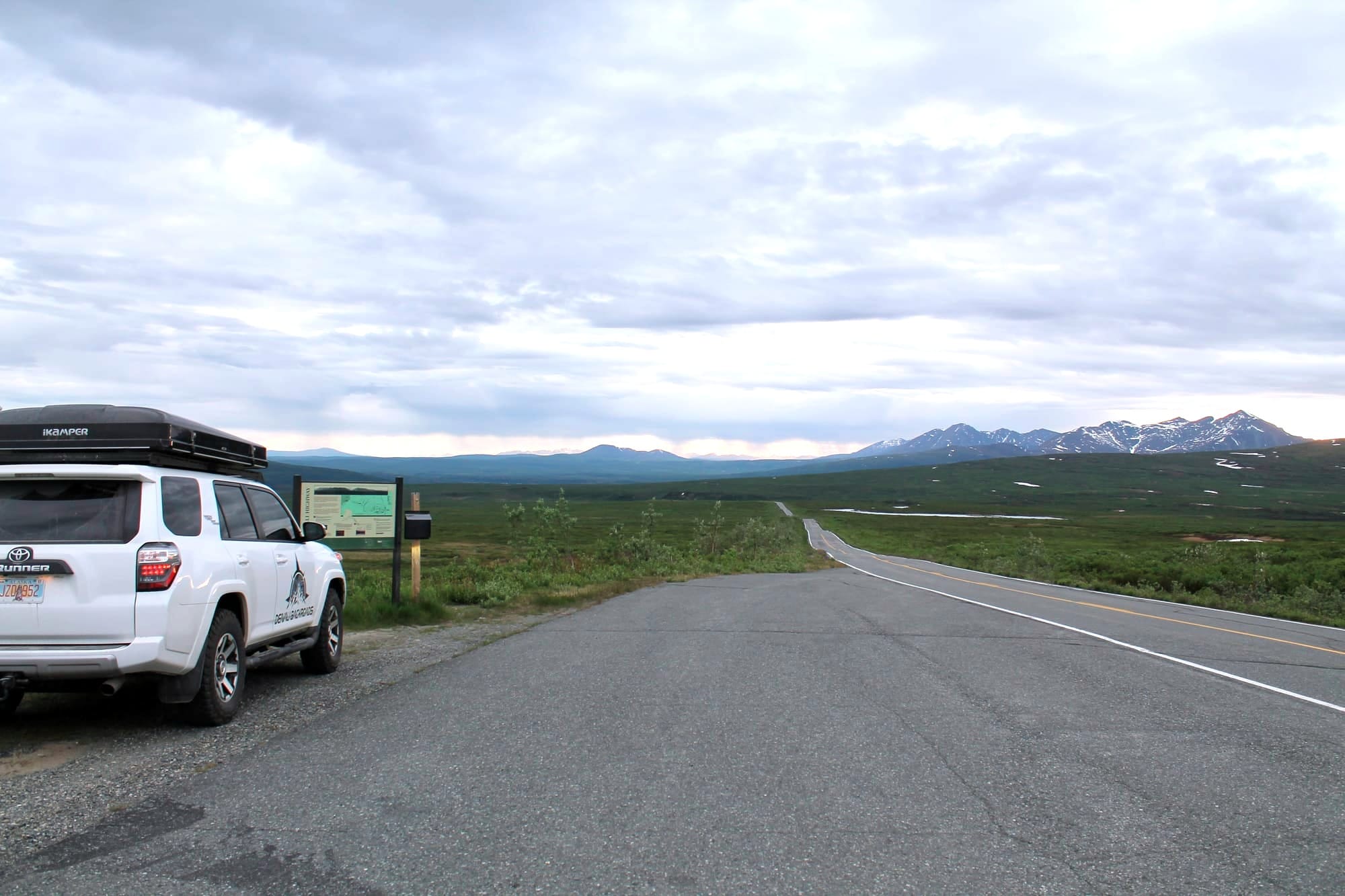
A Bit of History
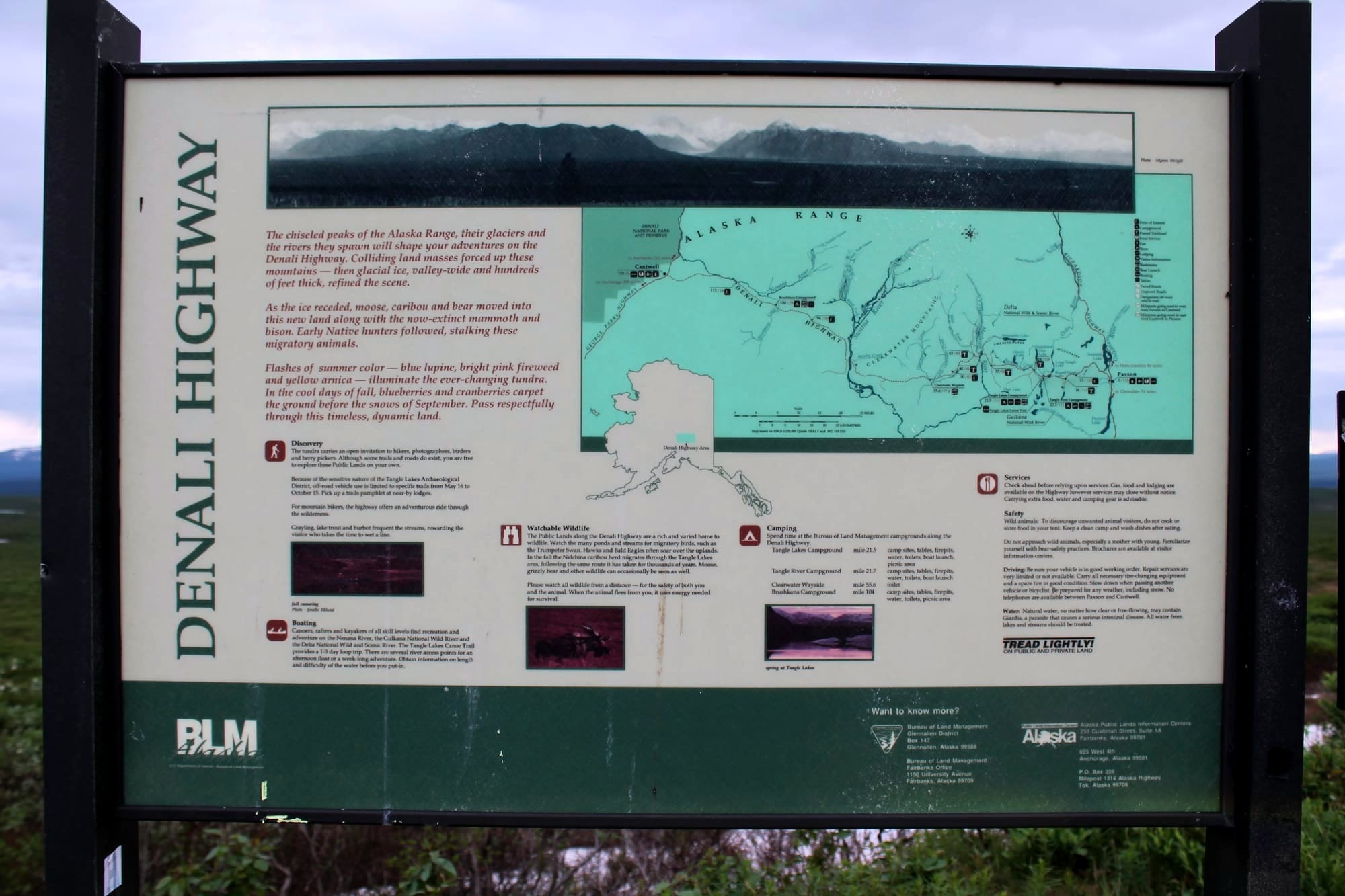
The Denali Highway, also known as Alaska Route 8, runs about 135 miles between Paxson (on the Richardson Highway) and Cantwell (on the Parks Highway).
It officially opened in 1957, and for years it was the primary road access to Denali National Park until the Parks Highway was completed in the early 1970s.
The route itself has deeper roots, following trails and passages that were used by Indigenous peoples, miners, trappers, and early explorers long before the highway ever existed.
Over time, as more visitors began using the Parks Highway to reach Denali, the Denali Highway became less traveled, and its gravel stretches and remote feel turning it into a favorite for those seeking solitude and wild scenery.
What You’ll See (and Feel) Along the Way
Crossing the Denali Highway is a sensory experience. Some of the standout features and highlights include:
Maclaren Summit and the Alaska Range Views
- The road leaves Paxson, climbs into foothills, and passes through tundra, wetlands, small lakes, and mountain vistas.
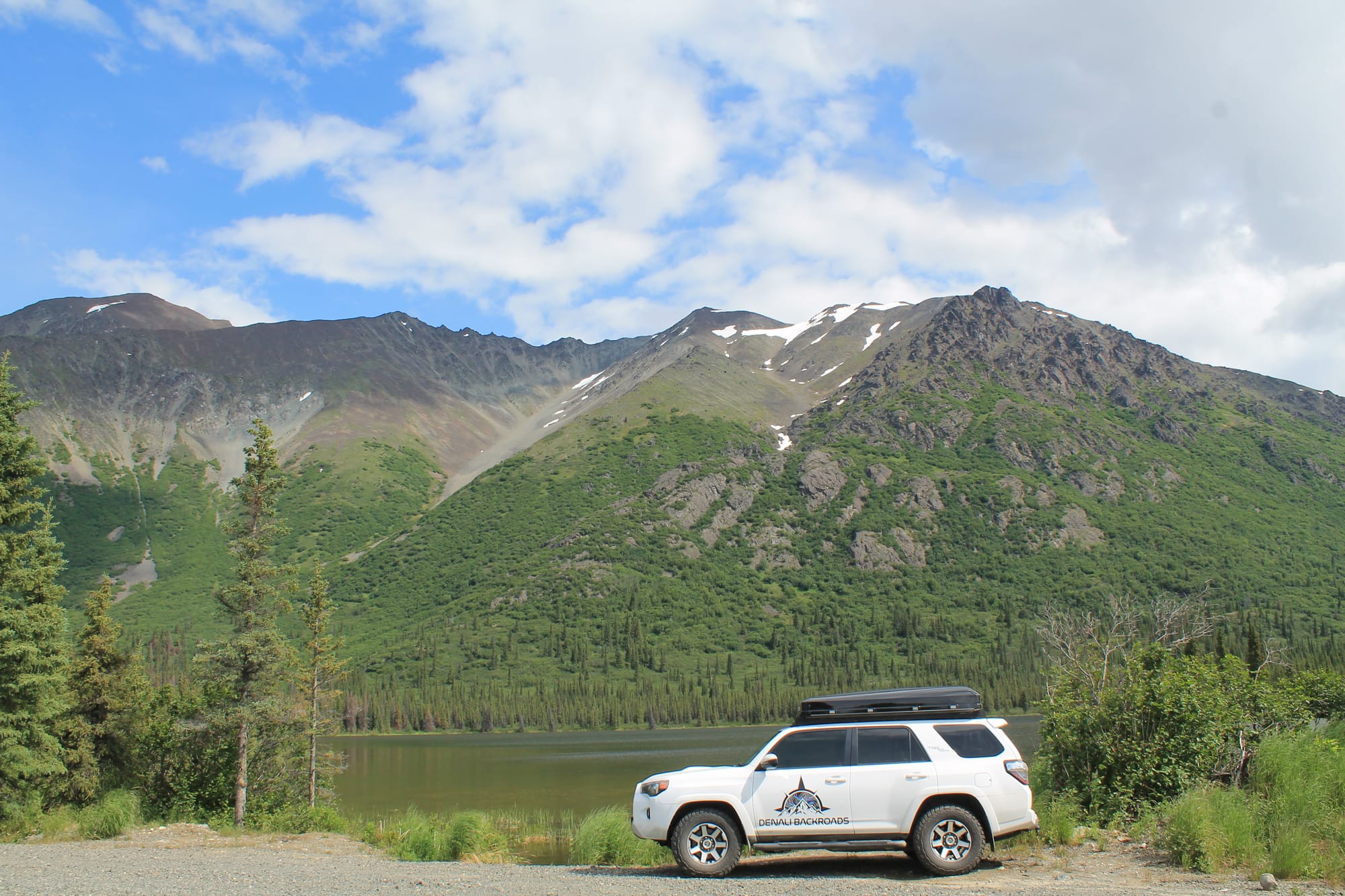
- Around Maclaren Summit (Milepost 37), you’ll stand at over 4,000 feet and see sweeping panoramas of the Alaska Range and nearby peaks like Mount Hayes.
Glacier Landscapes and River Valleys
- The route descends toward the Maclaren River Valley, with views of glaciers, flowing rivers, and geologic features like eskers and kettle lakes all remnants of glacial activity.
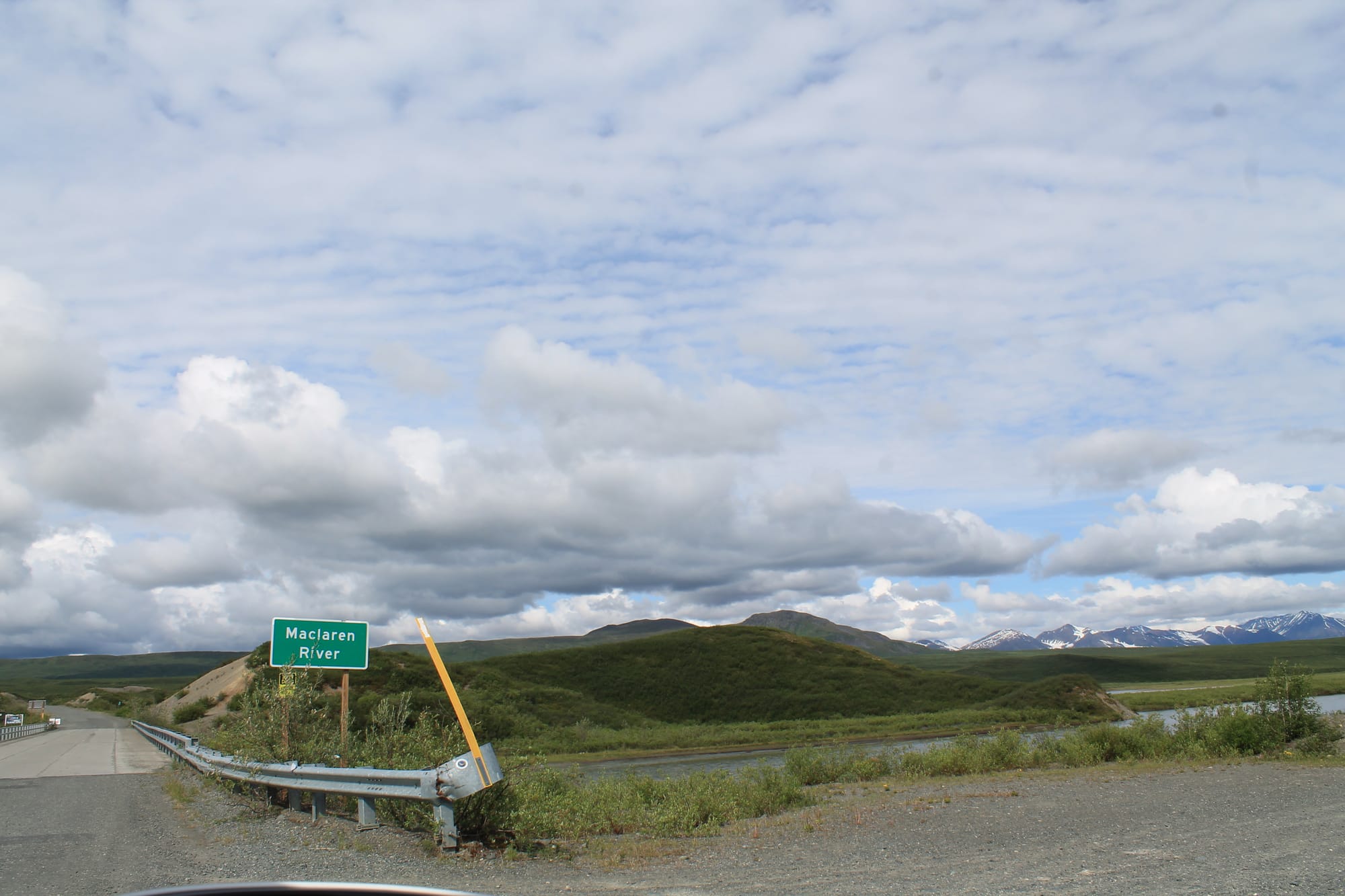
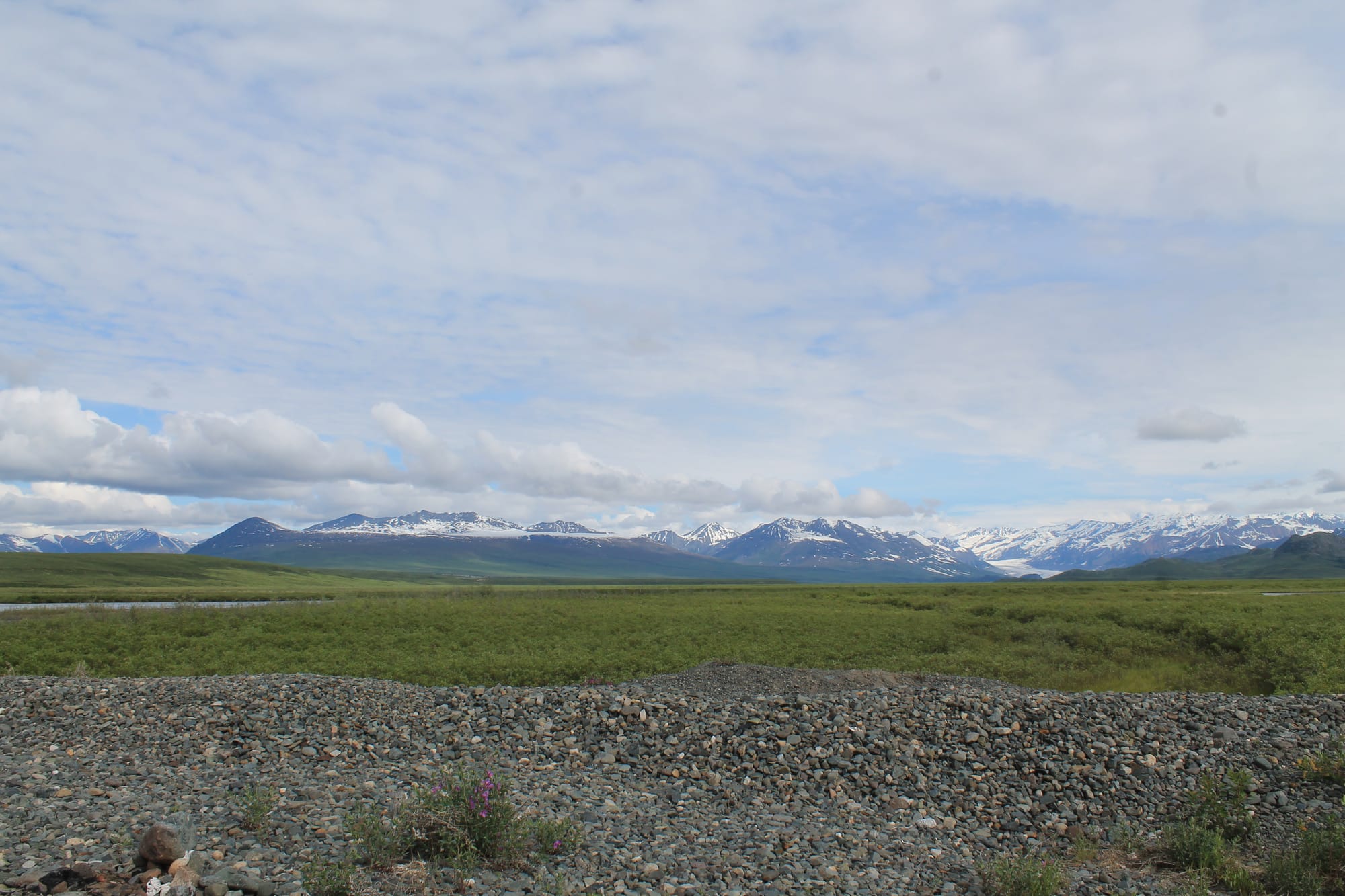
- In places like Crazy Notch you’ll see dramatic cuts in rock created by glacial forces.
Wildlife and Birding Along the Route
- Wildlife is still part of the journey while large mammals are less frequent than inside the park, you may see moose, caribou (especially the Nelchina herd), foxes or smaller mammals.
- Birding is excellent: alpine breeders, waterfowl around lakes and rivers and migratory species passing through.
Challenges & What Makes It Unique
Road Surface and Seasonal Conditions
- Most of the Denali Highway is gravel or chip-sealed - only the first 20 miles from Paxson and a short stretch near Cantwell are paved.
Limited Services and Remote Travel
- Because it’s remote and lightly traveled, services are extremely limited. Gas, food, and lodging are sparse.
- The road is seasonal and typically open from mid-May through mid-September, though exact dates depend on weather.
- Conditions can vary drastically: potholes, washboarding, soft spots, and sharp rocks are common. Dust and limited visibility after passing vehicles may also be an issue.
- The speed limit is low (around 35 mph), and travelers are encouraged to take their time to protect tires and suspension.
- Because the highway is less maintained and subject to weather damage, it’s best to check road conditions before heading out.

Tips & Suggestions for Your Crossing
Start early
Give yourself plenty of daylight. There’s no need to rush the 135 miles with so much to see.
Bring supplies
Extra fuel, spare tires, repair tools, food, water, and weather-appropriate clothing are essentials.
Stay flexible
Road conditions or weather may force you to slow down or adjust plans.
Plan for stops
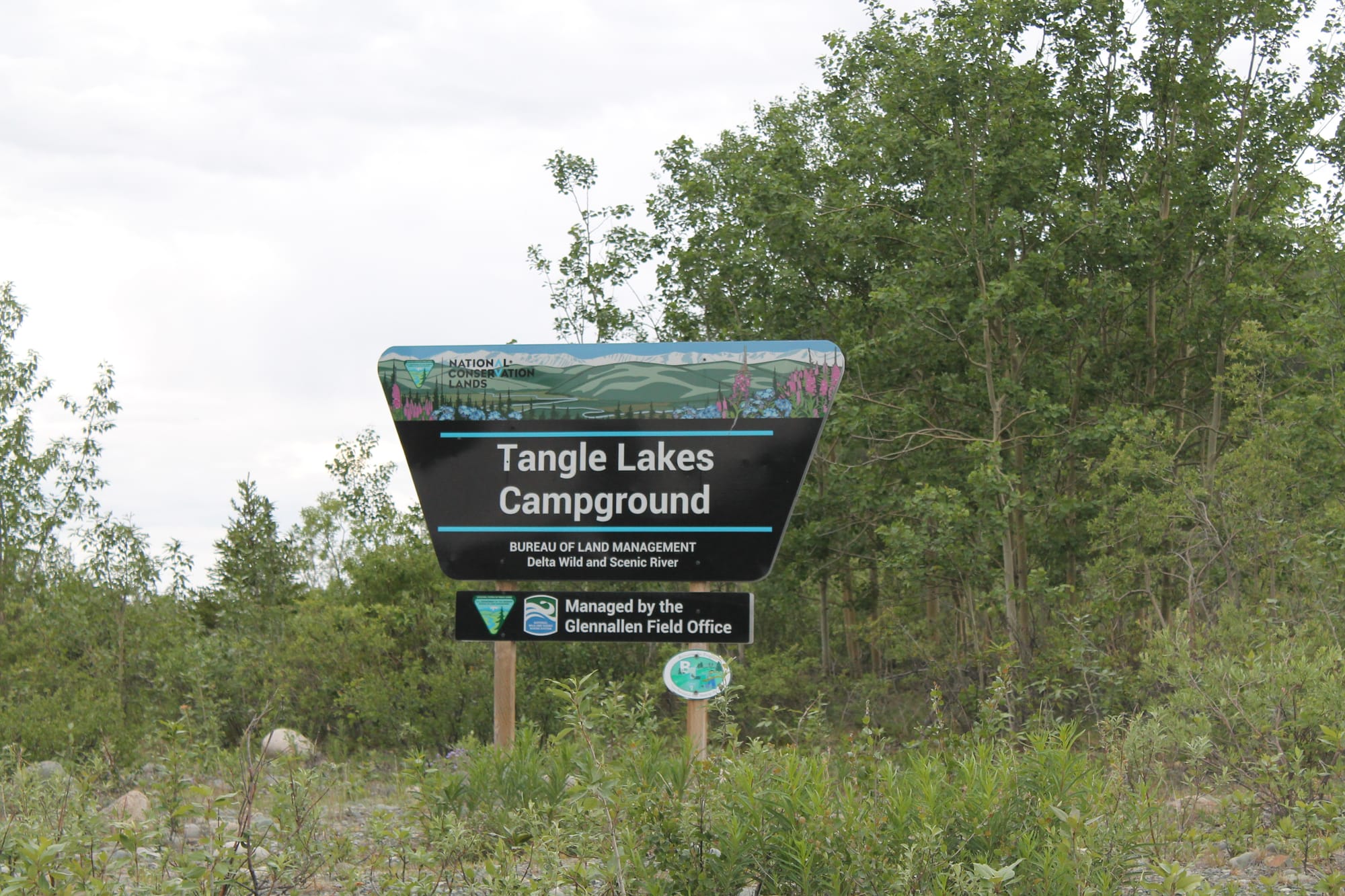
Enjoy pullouts for photos, hikes, and side explorations. Tangle Lakes, Maclaren Summit, and Clearwater Creek are popular stops.
Overnight options
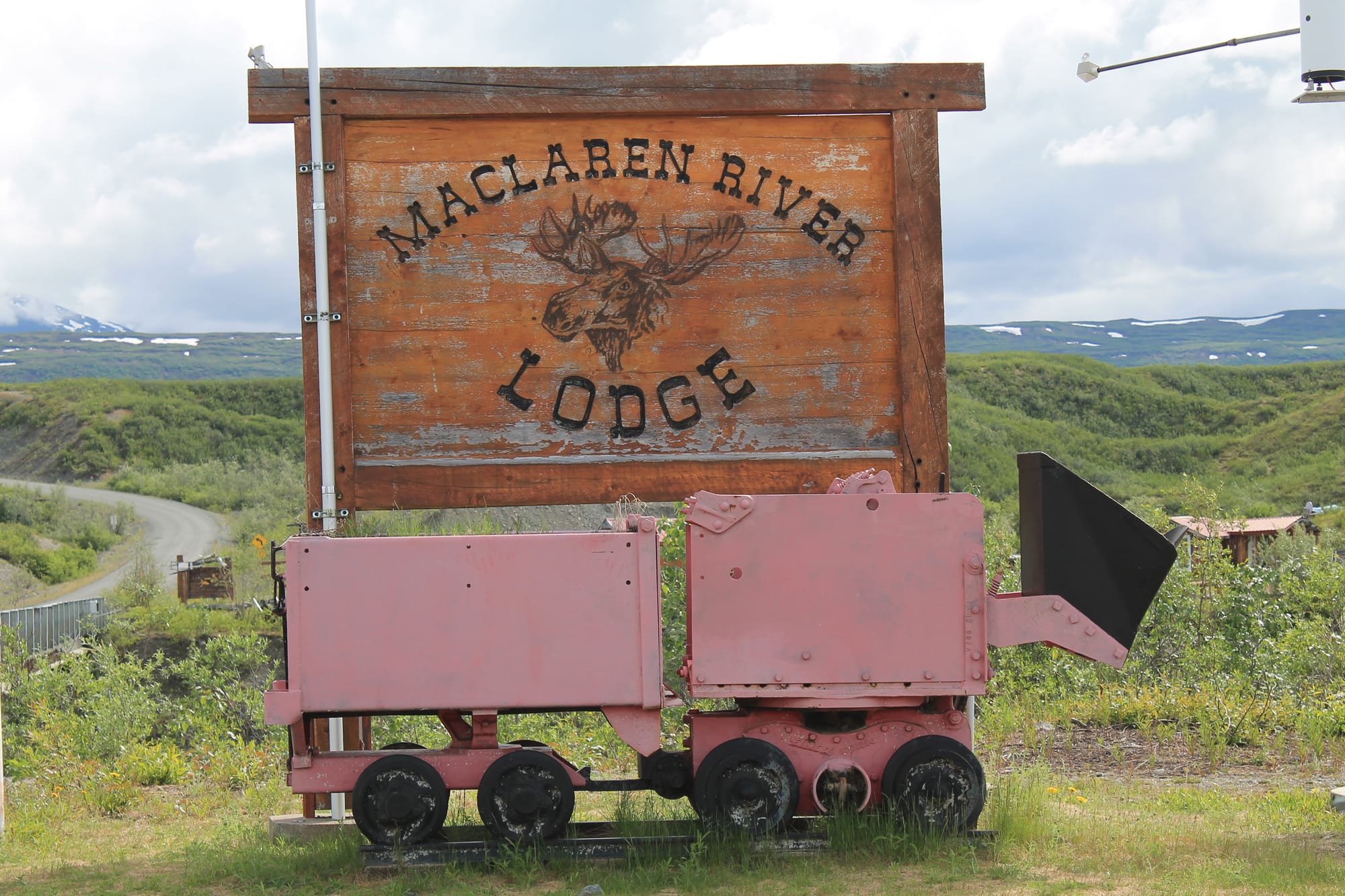
If you don’t want to drive it in a day, there are lodges and campgrounds along the route.
Expect quiet
You might pass very few other vehicles. Embrace the peace and wilderness.
Watch the calendar
In late August and early September, the route may be busier with hunters, and wildlife activity often increases.
Why Choose the Denali Highway for Your Next Alaska Adventure?
Crossing the Denali Highway isn’t just a route it’s a chance to slow down, breathe in the vastness, and experience Alaska beyond the typical tourist loop.
If you want wide tundra, shocking silence, unexpected vistas, and a true sense of wildness, this is the road that delivers.
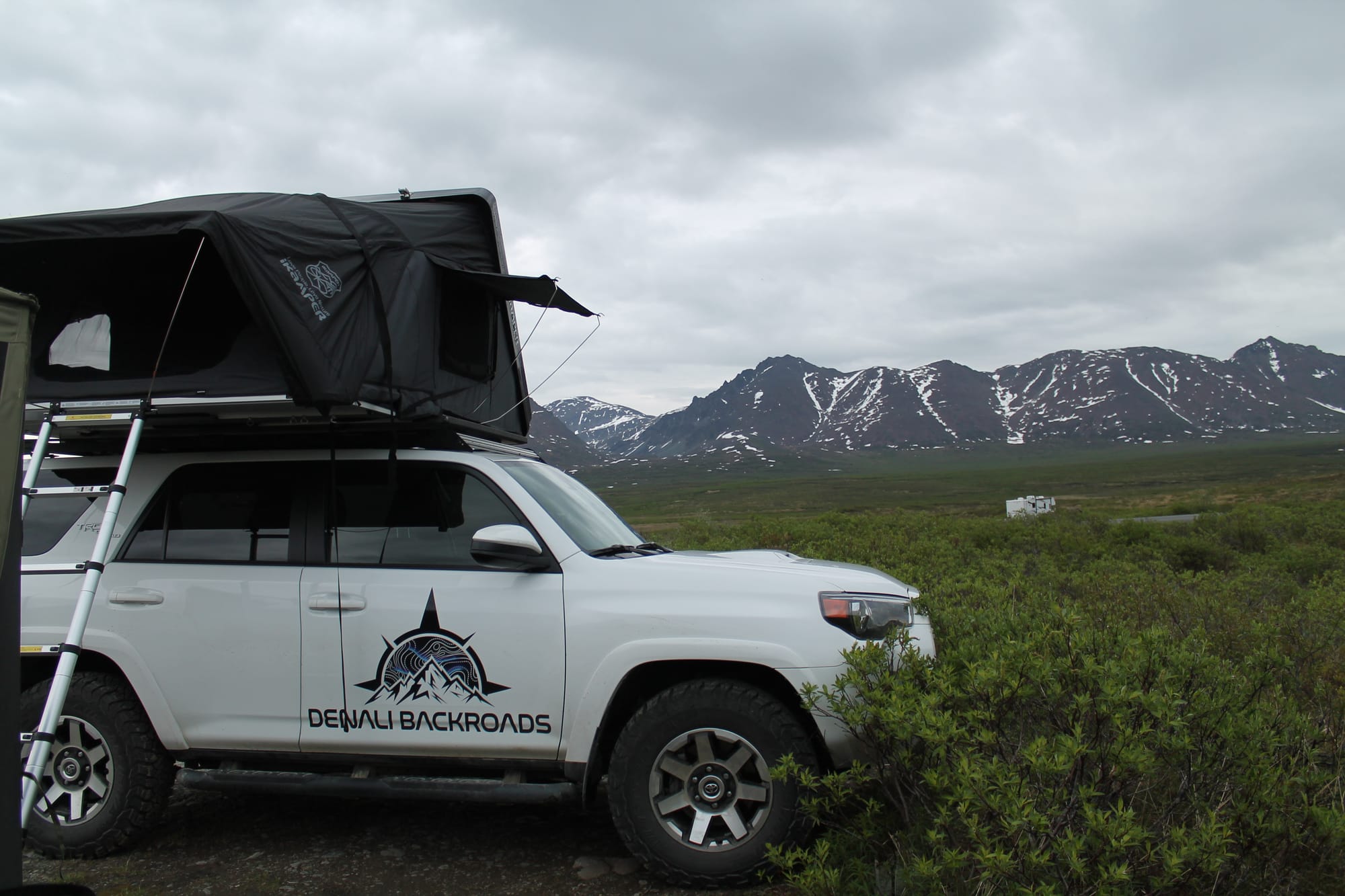
Let Denali Backroads guide you across it with support, insight and local love for the landscapes you’ll never forget.
Member discussion