
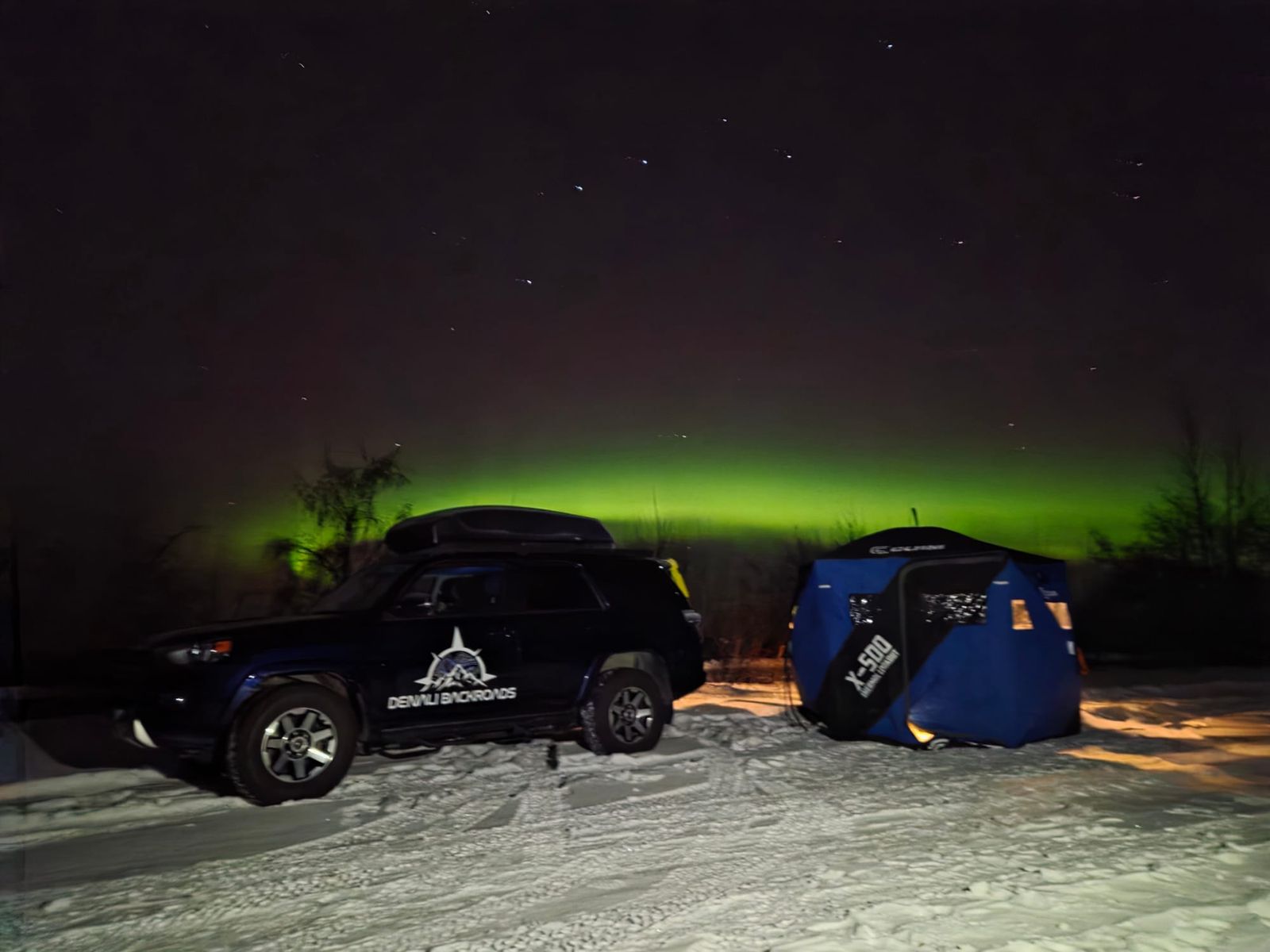
I once heard the Northern Lights on an ice climb. Recently, I heard them again on a marimba.
The Denali Backroads team recently attended a marimba recital here in Fairbanks, Alaska, by Dr. Sean Dowgray of the University of Alaska Fairbanks Music Department.
It was a wonderful performance, but one piece in particular caught our attention: Northern Lights, by American composer Eric Ewazen.
Ewazen wrote Northern Lights for solo marimba in 1989 for marimbist Gordon Stout. The approximately 14-minute composition seems particularly well suited to its subject. The marimba can create everything from quiet, mysterious passages to sudden waves of sound, rhythm and energy.
Sitting there listening, it was difficult not to picture the Northern Lights dancing over Alaska.
And it brought back a memory.
I Have Heard the Northern Lights
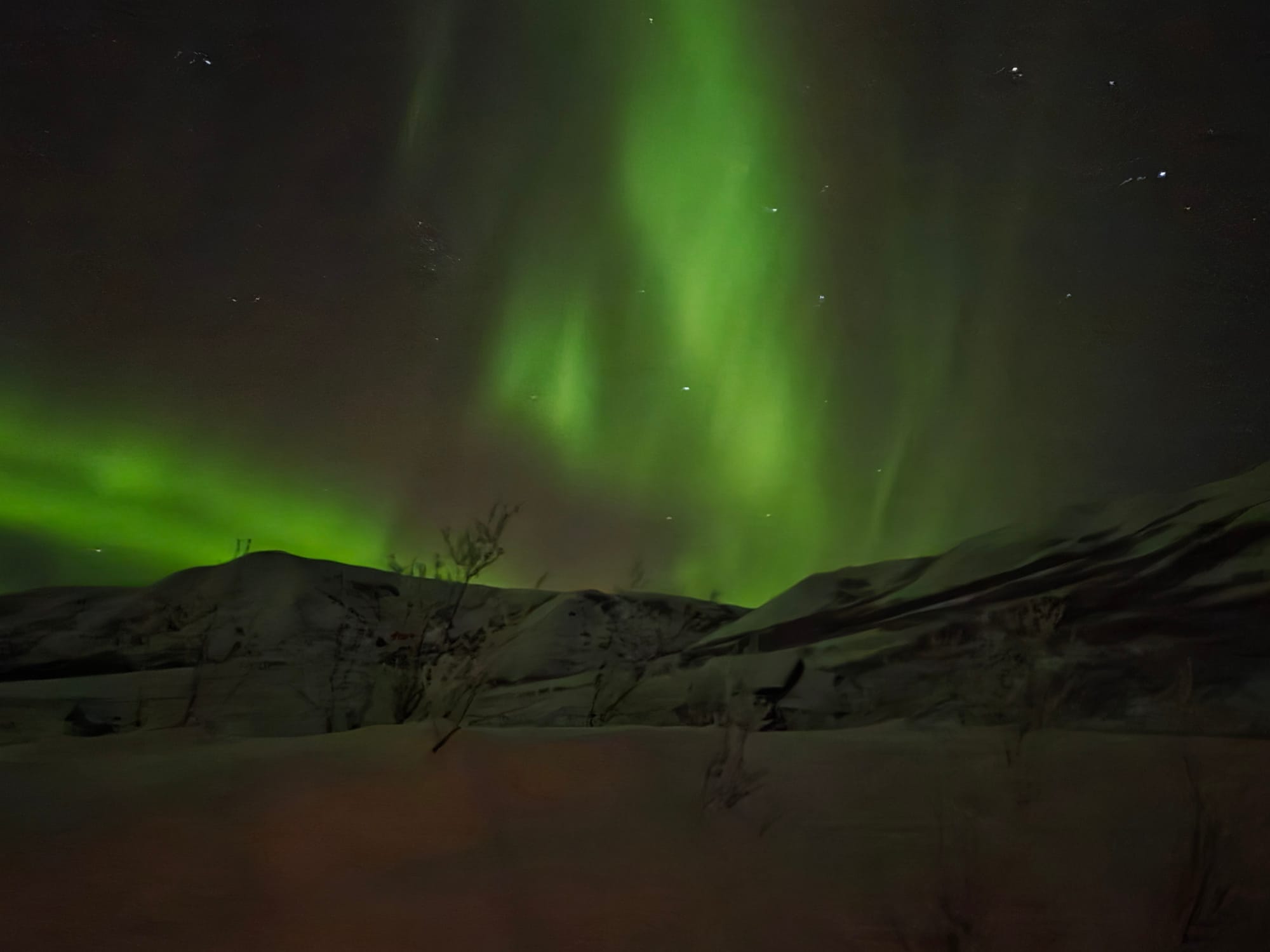
Years ago, I was on a roughly 2,200-foot ice climb in Alaska beneath the Northern Lights.
And I heard them.
At least, I believe I did.
What I remember wasn't a loud crack or a bang. It was more like a hissing and swooshing sound accompanying the lights overhead.
It's an experience I've never forgotten.
Tell someone you've heard the Northern Lights, however, and you're likely to get one of two responses.
Some people will immediately tell you they've heard them too.
Others will tell you it's impossible.
Interestingly, scientists have wrestled with essentially the same question.
Do the Northern Lights Really Make Sound?
There is a very good scientific reason to be skeptical.
The visible aurora borealis, or Northern Lights, occurs extraordinarily high in Earth's atmosphere, commonly around 50 to 90 miles above us. Ordinary sound traveling through the atmosphere from those heights could not reach someone on the ground at the same instant they watched the aurora move.
For years, that was one of the strongest arguments against stories of people hearing the Northern Lights.
Yet reports persisted.
People beneath the auroral oval have described hearing hissing, crackling, popping, snapping and other unusual sounds during auroral displays.
Eventually, researchers began putting microphones beneath the Northern Lights to investigate.
And things got interesting.
The Science Behind Northern Lights Sounds
Professor Emeritus Unto K. Laine of Aalto University in Finland has spent years researching sounds associated with the Northern Lights and geomagnetic activity.
His research produced a surprising result.
In experiments in Finland, sound sources associated with geomagnetic and auroral activity were localized not at the altitude of the visible aurora, but only about 70 to 80 meters — roughly 230 to 260 feet — above the ground.
That changes the question considerably.
Laine has proposed that under the right atmospheric conditions, electrical charges accumulate around a temperature-inversion layer close to the ground. Geomagnetic activity can then disturb those accumulated charges, potentially producing electrical discharges and audible sounds.
Researchers have recorded pops, crackles and other noises and found relationships between these acoustic events and changes in the geomagnetic field.
Later experiments even identified candidate sounds during geomagnetic activity when no visible aurora was present.
The research doesn't establish that every hiss, crackle or swoosh someone hears while watching the Northern Lights is actually caused by auroral activity. The exact nature of these sounds remains an intriguing area of research.
But it does suggest that generations of reports from people who claimed to hear something beneath the Northern Lights shouldn't necessarily be dismissed.
And here's something particularly interesting for those of us in Fairbanks and Interior Alaska:
The proposed mechanism favors very cold, calm and clear conditions that allow a strong temperature inversion to develop.
If you've spent a winter night in Fairbanks, that description probably sounds familiar.
What Would the Northern Lights Sound Like as Music?
Which brings us back to Dr. Dowgray, a marimba and Eric Ewazen's Northern Lights.
Music doesn't have to answer the scientific question.
It can ask a different one:
If you could turn the Northern Lights into music, what would they sound like?
Perhaps that's part of what makes the marimba such a fascinating instrument for a piece about the aurora. A marimba can be delicate and quiet one moment and full of movement and energy the next.
So can the Northern Lights.
Anyone who has spent enough time watching the aurora in Alaska knows that it isn't one experience.
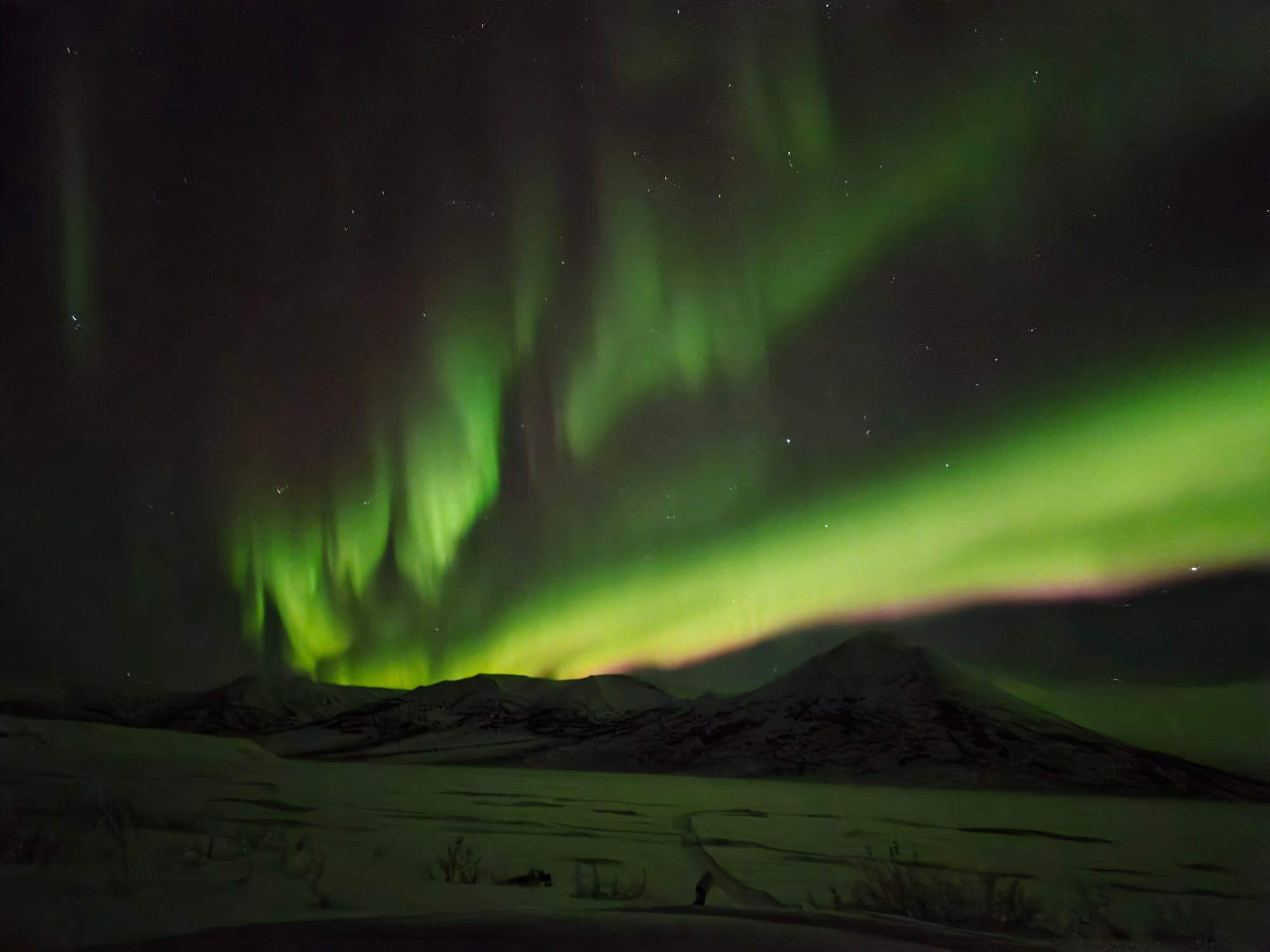
Sometimes there's a faint green arc sitting almost motionless over the horizon.
Sometimes a curtain begins to form.
Then suddenly the entire sky seems to come alive. Rays shoot upward. Curtains fold over themselves. Colors appear. The display races from one horizon to another.
And then, almost as quickly, everything becomes quiet again.
Maybe that's something music can express better than words.
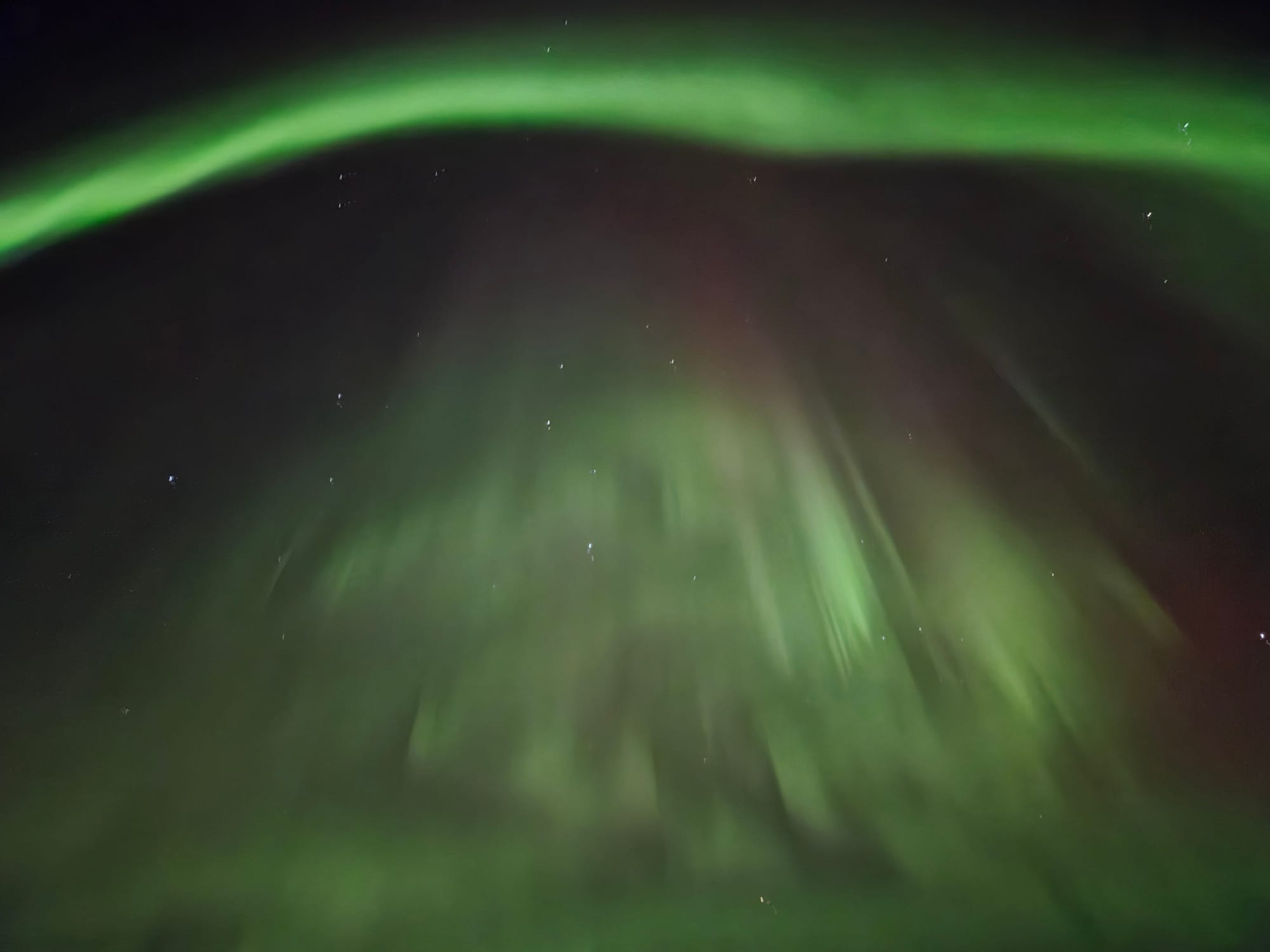
What Do the Northern Lights Sound Like to You?
To Eric Ewazen, perhaps they sound like a marimba.
To researchers investigating auroral acoustics, they can be associated with pops and crackles and electrical activity much closer to the ground.
To me, on one unforgettable Alaska night, they sounded like hissing and swooshing overhead.
And to you?
They might sound like something entirely different.
Or they might sound like nothing at all.
There is something special about getting far enough away from town, turning off the engine, stepping outside and simply standing beneath an Interior Alaska night sky.
No traffic.
No television.
No phone.
Just darkness, cold air and the Northern Lights moving overhead.
At Denali Backroads, we can't promise that you'll hear the aurora.
But we can help you get out there and listen.
Aurora season has returned to Interior Alaska.
Maybe this is the year you discover what the Northern Lights sound like to you.
Member discussion